
Chinese Coix Seed Congee with Shiitake Mushrooms (Yi Yi Ren Porridge)
BREAKFASTUNIQUE INGREDIENTSVEGANENER-QIDETOX
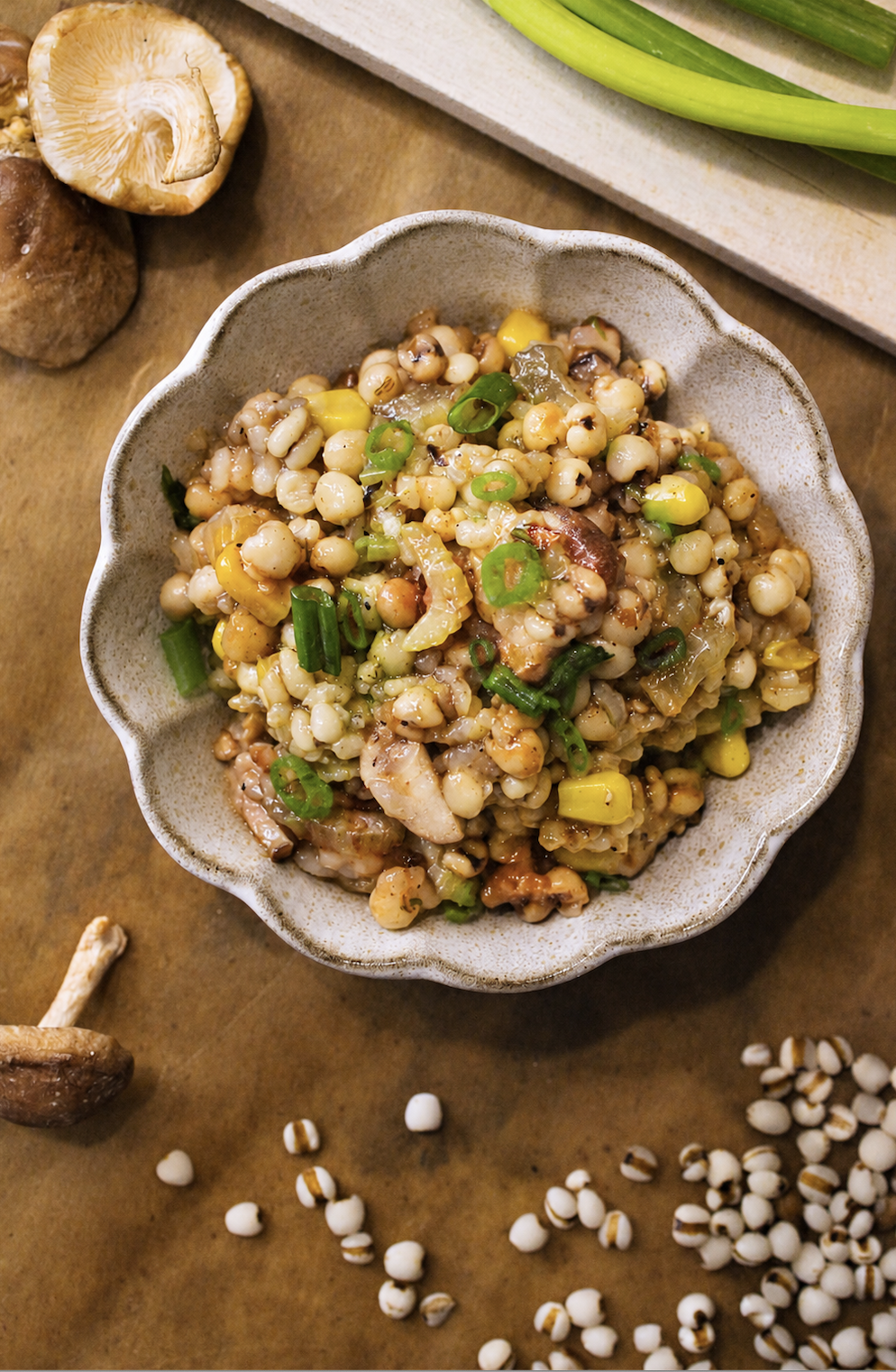
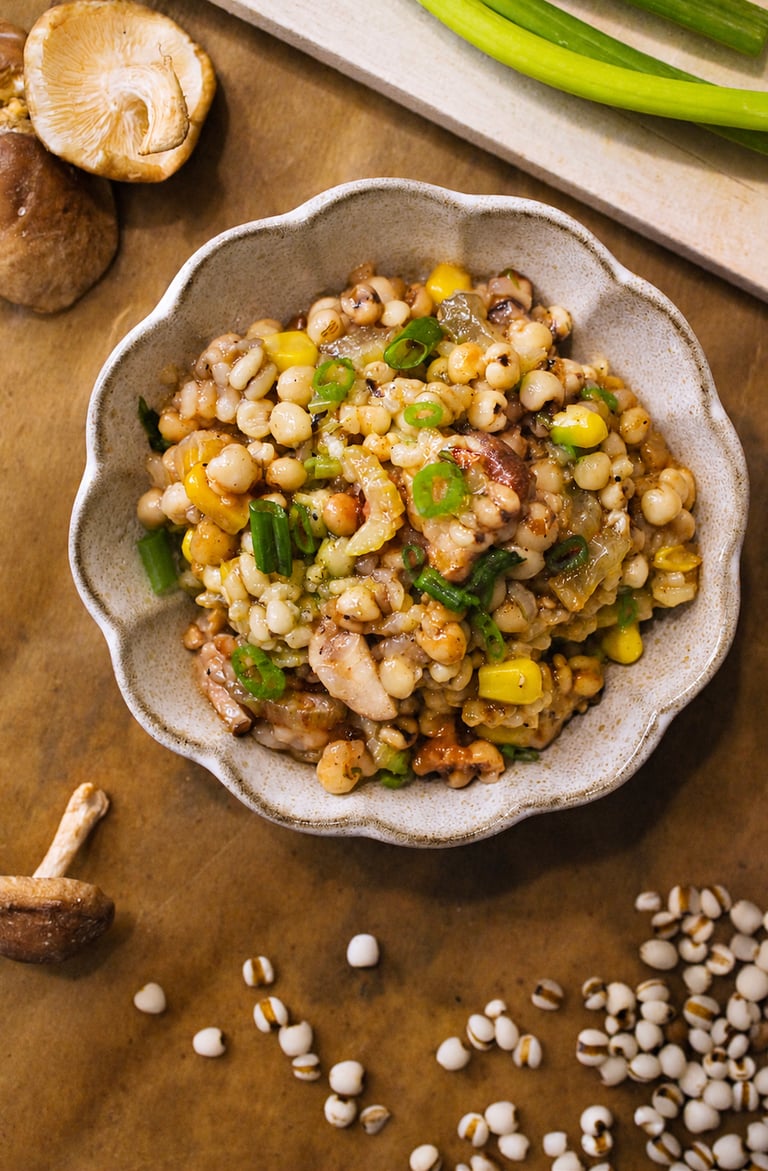
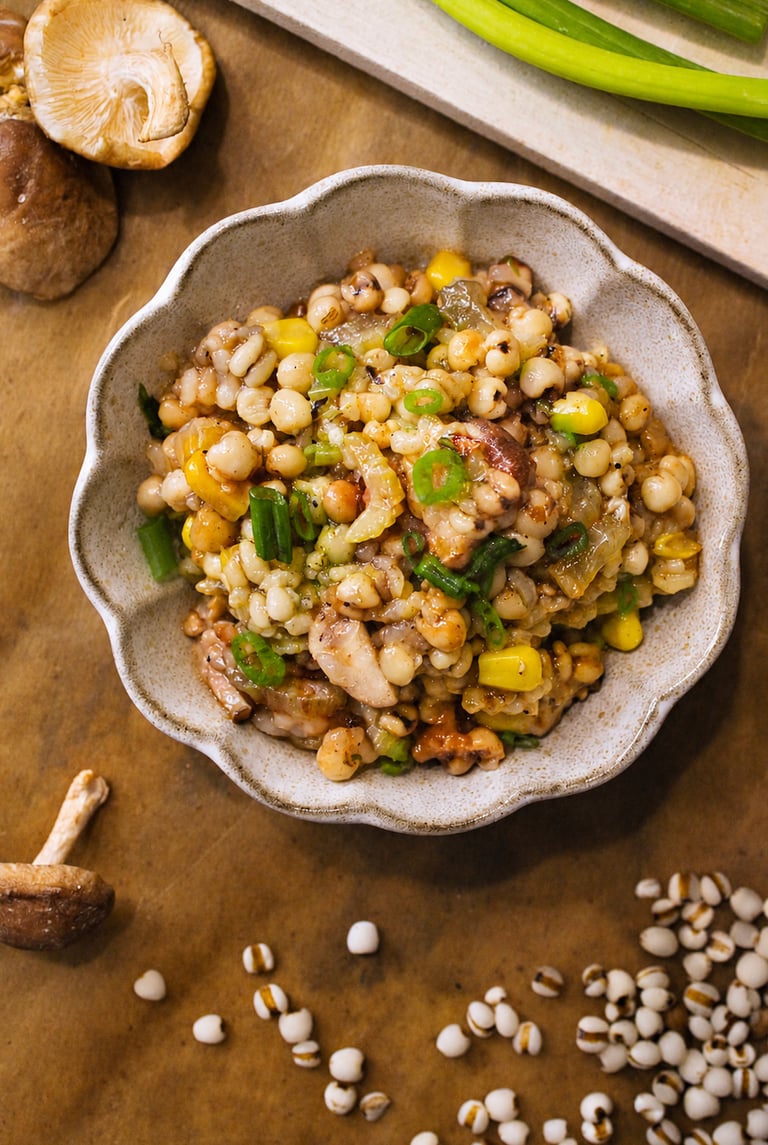
There’s something so comforting about a warm bowl of congee. What is congee, you may be wondering? Traditionally, congee (pronounced "kan-ji") is a porridge made by slowly simmering grains—usually rice—in plenty of water until they become soft, creamy, and easy to digest. In many Asian countries, congees are commonly made when someone is sick, or it might be served as a warm breakfast dish. Congee is easy on the digestive system and provides a simple, nourishing way to support digestion, energy and recovery.
And while rice congee tends to get most of the attention, this version features coix seeds—also known as Job’s Tears or Yi Yi Ren in Traditional Chinese Medicine (TCM). Combined with shiitake mushrooms, celery, scallions, and a savory garlic-cilantro drizzle, it creates a simple meal that nourishes the digestive system and gives the body a gentle deep-cleaning, with the detoxifying and dampness-draining properties of coix seed.
If you've never cooked with coix seeds before, this is a delicious place to start!


Why I Love This Recipe: Let’s Talk TCM
Some of the most therapeutic meals in Chinese food therapy are also some of the simplest. Congee is a perfect example. While good ol' fashioned white rice, sweet potatoes and ginger are the three ingredients I most often use to make congee, this recipe is fun (and very healing!) if you'd like to throw in a few more unique ingredients.
This recipes is especially great if you often feel bloated, sluggish, foggy-headed, or like you're carrying around a little extra heaviness that you can't quite explain, Chinese medicine might describe that pattern as dampness. Dampness isn't necessarily just water retention, although it can include that. It's more of a state where fluids, waste products, and metabolic byproducts aren't being efficiently transformed and moved by the body. People often describe it as feeling heavy, puffy, tired, or like they're moving through mud.
One of the reasons dampness is so common today is because of our poor diets. Many people are dealing with some degree of spleen qi deficiency as a result. In TCM, the spleen is responsible for transforming food into energy and transporting fluids throughout the body. When digestion becomes weakened, over time, dampness accumulates.
This is where coix seeds can really come in handy. Known as Yi Yi Ren in Chinese medicine, coix seeds are famous for helping the body drain dampness while simultaneously supporting digestion. Unlike aggressive cleanses or detoxes, they work gently, encouraging the body to do what it was designed to do rather than forcing it.
The supporting ingredients each bring something valuable to the table, as well. Shiitake mushrooms help nourish qi and support immune function, while scallions and garlic provide warmth and movement to keep digestion active. Celery adds a cooling quality that helps balance the dish, and the small amount of rice creates the creamy texture that makes congee so comforting.
One of the things I appreciate most about this recipe is that it embodies a principle that often gets overlooked in modern wellness culture: sometimes the most nourishing thing you can do for your body is slow down and eat something warm.



Join Our Mailing List.
Hungry for More?
Coix Seed Congee Ingredients
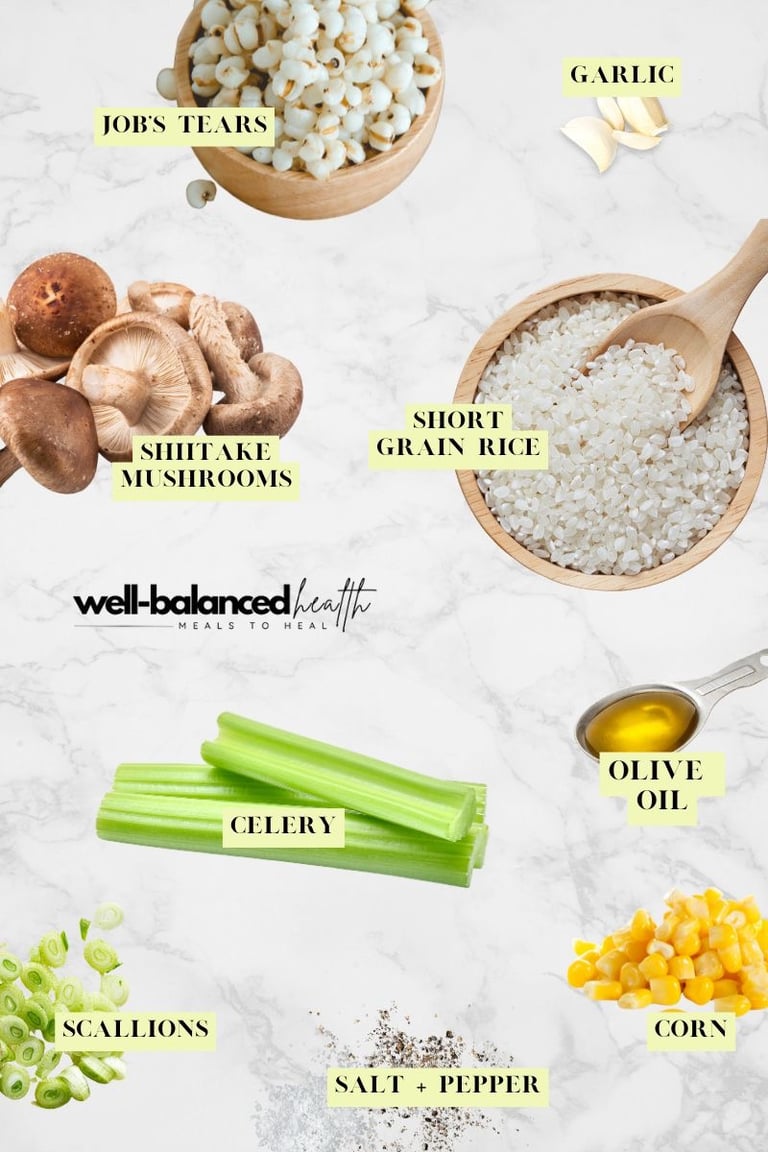
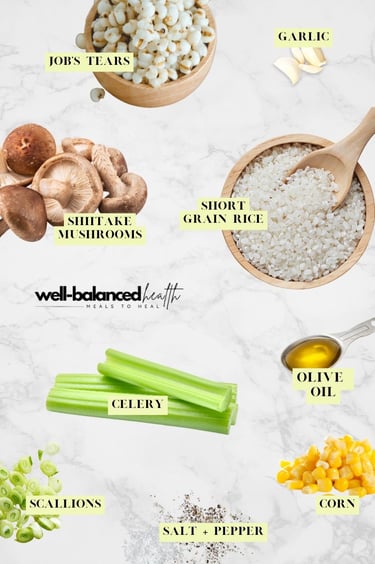
1/2 cup pearl barley (AKA: Job’s Tears, coix seeds, or “Yi Yi Ren”), soaked 8 hours overnight
3 tablespoons olive oil
2 cloves of garlic, minced
1/4 cup short grain rice
1/2 cup shiitake mushrooms, thinly sliced
1 stalk celery, chopped
1/8 cup scallions, chopped
1/3 cup corn
5 cups water
salt and pepper, to taste
For the Garlic-Cilantro "Soy Sauce":
1 tablespoon cilantro, finely chopped
1 tablespoon coconut aminos (or gluten-free tamari)
1/2 tablespoon olive oil
1 clove of garlic, minced
Why You'll Love This Recipe: Gentle Detox
Supports Healthy Digestion: Congee has long been used in TCM as a gentle, easy-to-digest food that helps nourish the digestive system.
Great for Dampness Patterns: Coix seeds are one of the most commonly used food-based recommendations in Chinese dietary therapy for dampness.
Comforting Yet Light: Unlike heavier comfort foods, this congee feels satisfying while still leaving you feeling energized.


How to Make This Coix Seed Congee (Summary)
Soak the coix seeds: Soak coix seeds overnight, then drain.
Build the base: Sauté garlic in olive oil, then stir in rice and coix seeds.
Add the vegetables: Add shiitake mushrooms, celery, scallions, and corn and cook briefly.
Simmer the congee: Add water and cook until the grains soften and the mixture becomes creamy.
Season: Add salt and pepper during the final minutes of cooking.
Prepare the finishing sauce: Stir together cilantro, soy sauce, olive oil, and garlic.
Serve: Ladle congee into bowls and finish with the garlic-cilantro drizzle.


More Recipes You May Like:
© 2026. Well-Balanced Health. All rights reserved.